Combine Two Things
Stuck for game master ideas? Combine two things you love. A simple creative tool for building NPCs, locations, and situations for your tabletop RPG.
Practical advice for running Dungeons & Dragons and other tabletop RPGs, from worldbuilding to campaign management. New articles by email, free.

Join 700+ game masters getting new PhD20 articles by email.
🛡️ We don't sell your data. Unsubscribe at any time.

Stuck for game master ideas? Combine two things you love. A simple creative tool for building NPCs, locations, and situations for your tabletop RPG.
Most TTRPG advice tells you what to prep. It should tell you where to start. Two questions that change how game masters prep sessions, build worlds, and more.
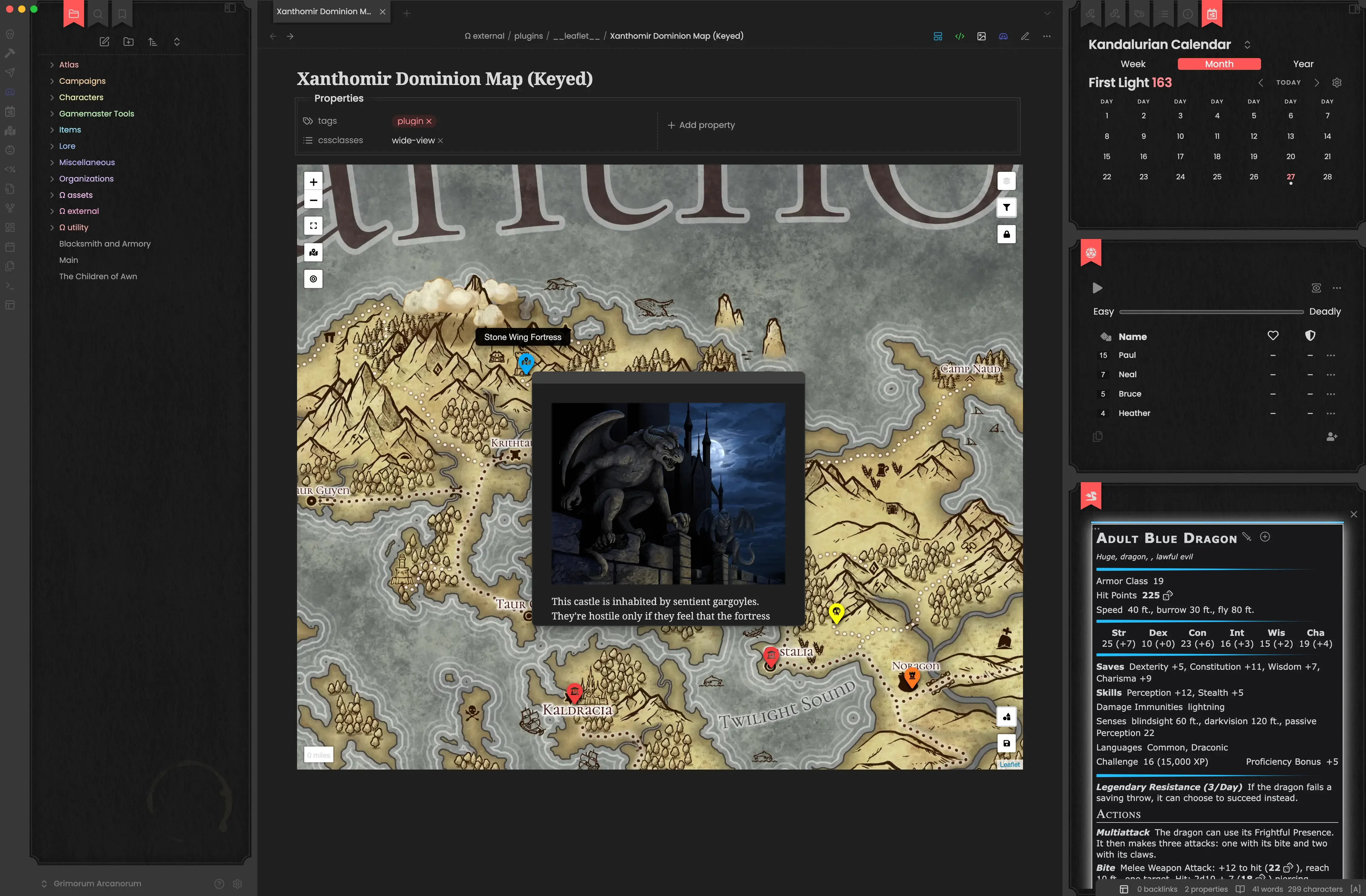
Obsidian is a powerhouse for organizing and managing roleplaying games like Dungeons & Dragons. This guide will help you get started.
In our games, taverns are often nothing more than a container for information or conflict. Let's fix that.
Discover awesome apps and technology for managing TTRPG campaigns. Learn powerful principles, practical tips, and even get templates to help get you started on your journey. Check out step-by-step guides for tools like Legendkeeper, Notion, and Obsidian that can change your game (and how you manage it). The digital landscape of TTRPGs is changing rapidly and these articles will help you navigate it. Dive in:
Use bold, bullets, and italics to structure NPC notes around landmark, hidden, and secret information you can actually use at the table.
With a few key ideas and resources in mind, we can do a lot with images in Obsidian while avoiding headaches.
With just a few basic properties, we unlock a lot of powerful capabilities in how we organize and use our location notes.
More Obsidian for D&D articles
Learn how to build tabletop roleplaying game worlds for actual play, not encyclopedias to be ignored. Gaming worlds full of fantasy and lore are right at your fingertips and it's time to start creating. Get inspired with new ideas and tools for harnessing that creative energy. Check out models and templates to help you have more fun building your worlds and playing in them. Get started:
Learn how to design cities for D&D and other TTRPGs using theme park principles—themed neighborhoods, memorable locations, and immersive experiences players won't forget.
Lore isn't exposition. Discover why worldbuilding serves the GM first, and how that energy translates to better games for everyone at the table.
Build your world from within. Artifactory worldbuilding turns your GM notes into in-world artifacts—letters, journals, wanted posters—that make your setting feel alive.
I've spent over fifteen years running tabletop roleplaying games like D&D. In that time, I've discovered hundreds of tips and tricks to running better games. Find ways to improve you and your players' experience for any part of the game. Drop in homebrew rules or try a new tip and watch the magic happen. Some of my favorites:
What if we ran tabletop RPGs the way software teams ship software? Adapting the twelve principles of the Agile Manifesto into a philosophy for game masters.
The most impactful NPC detail isn't motivation or backstory. Start with what your Dungeons & Dragons NPC is feeling right now, then ask why it changed.
Session zero tools never felt right. The Adventuring Agreement is my answer—a simple document to align expectations before the dice roll.